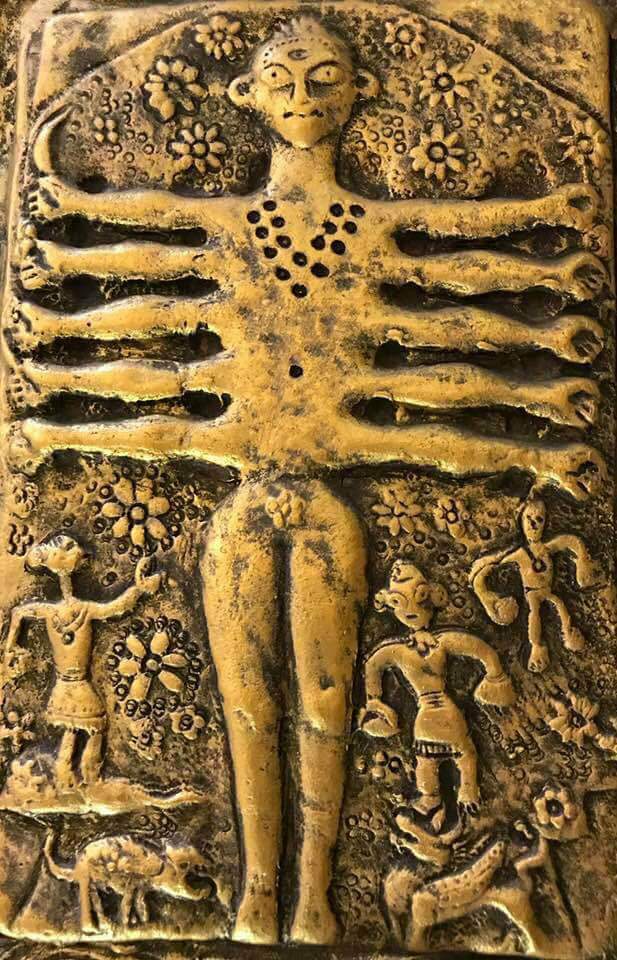
The Chutia tribe of Assam has many diverse types of customs and rituals which are inclined to both religion and socio-cultural elements. One of the most important ceremony/hokam is the Ai hokam which is a form of worshiping mother goddess. Let us now learn a few things about the hokam.
ABOUT AI HOKAM:
During the months of February and March, the climate of Assam remains windy and temperate. This results in the spread of airborne disease throughout the state. The Chutia tribe has performed a long and ancient tradition to worship mother goddess “Bakhanta Aai” during this season to help curtail the spread of diseases like Measles, Chicken Pox as a form of prayer. According to Chutia traditions, there are 7 forms of mother goddess out of which one is worshiped through this ceremony. At one point of time in the past, this ceremony was celebrated by each Chutia household once a year. But, due to time constraints and reduction of people suffering, many people started following the Hokam only when a person fell ill.
DETAILED DESCRIPTION:
Disclaimer: Being a tribe spread almost all over Assam, certain customs maybe varying from region to region. In places like Golaghat, Jorhat or Nagaon, there are even varying customs from village to village as these people may either be locals or migrants from different regions of the erstwhile Chutia kingdom. This is a version from one particular region.
Pre-ceremony rites(in case of diseased person):
Firstly, a specific room(Moral Ghar) of the house is cleaned and a stool with three legs made of Sam wood is placed in the room. Then, nine pairs of bananas are placed as offering to the mother goddess in the stool and a Sabha is called.
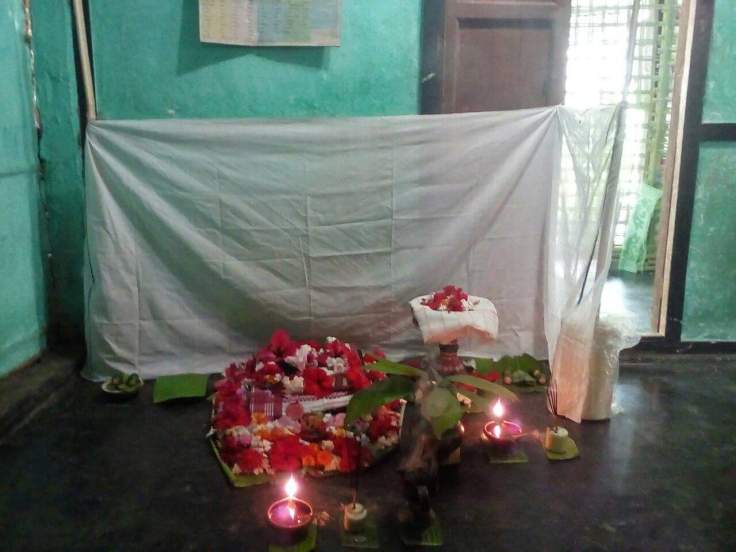
Whenever a person is suffering from this type of disease, people in the household stop their work and get busy in attending the person. Some food items are disallowed in the house. Some household chores like weaving or grinding rice are completely stopped until the Hokam is over. The head of the family then takes a bath, wears a simple cloth, lights an earthen lamp and offers a pair of bettle leaves and areca nut along with some money. He then prays to the ancestoral goddess to help the diseased, promises to perform a Ai sabha after the 7th or 9th day, ties some offerings in a bag and keeps it in the room. After that the person is made to lie in a maat above the bed, with Neem leaves beneath it. Outsiders aren’t allowed to come in contact with the person. A Xoria is placed above the three-legged stool/Pira, which is then filled with offerings like Tamul-paan, Dhan-hun, mani-mukuta, Cheleng kapur, White-coloured flower and covered with a white cloth. Besides these, an earthen lamp along with a urn filled with water and a mango branch. These items are kept until recovery.
During the third day of the illness, the goddess is given offerings. Three old-aged women known as “Gopinis” are called in by the family for preparing a meal which is served to the ill personThe meal must contain a dish of a sour-flavoured Cat fish curry either preprared using Bamboo shoot or a variety of vegetable called Madulang Tenga. The meal is first offered to the goddess to seek her blessings and is then provided to the person. This special kind of meal is thought to have medicinal qualities which helps in faster recovery.
Main ceremony rites:
For the main ceremony, seven to nine aged women(Gopinis) are called to the household. Two of these Gopinis are selected for preparing the meal for the offering. These Gopinis are called Gopini Deoris. One of them arranges six Banana leaves for offering food, while the other women prepares rice, duck/pigeon curry and offers it in three leaves.
 Chutia Tribe
Leave a comment