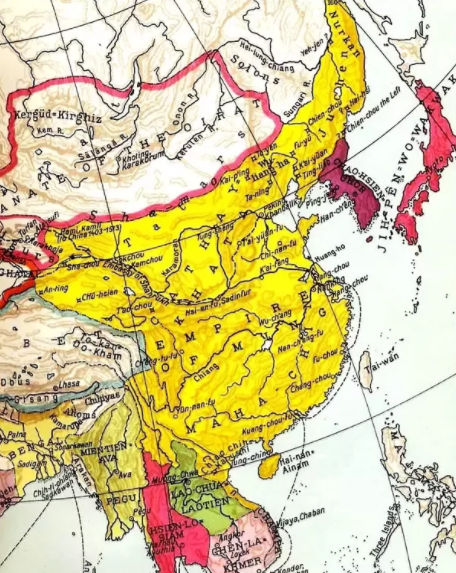
The ancestors of the Chutia tribe originally belonged to the region of Huang He river valley in China and lived there as a tribal confederation till the end of Xia dynasty. Being allies of the imperial Xia dynasty, they were exiled from the Northern plains at around 1600 BC, when the Shang dynasty overthrew the Xia dynasty.
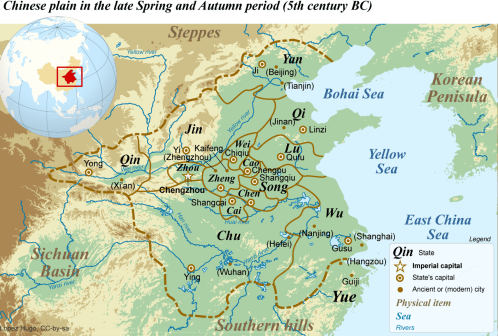
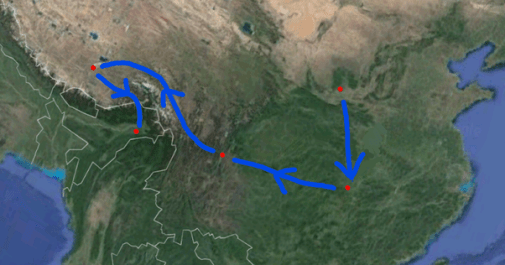
Due to this, these people moved to the Southern plains of the Yangtze river, formed an independent state of their own and lived in the Changsha region(which is mentioned in the folklores of the tribe). According to another folklore, the ancestors of the tribe moved at at early time from a fertile valley surrounded by two rivers(Hangriba and Bhalobra) on one side and by the sea on the other . This region can be clearly seen as the region between Huang ho, Yangtze rivers and the Yellow sea. Due to some unstated reason (which maybe either tribal aggression from the hill tribes, internal conflict or natural calamities), a section of the tribe migrated through Lhasa finally settling in today’s Assam. During the stay in Changsha as well as Lhasa, the tribe underwent significant cultural changes due to inter-marriages with the Ba and other such tribes of Southern China as well as Tibet. The ones who stayed back in China gave rise to the Southern Chinese dialects while the ones who migrated to Northeast India developed the Chutian language. During the period of stay in Tibet, Chutia people lived together with other Tibetan tribes which further led to similarities in their languages and gave rise to the Bodish group of Tibeto-Burman langauages. A section of these people migrated through Nepal , Bhutan and settled in the plains of Lower Assam and Northern Bengal. These later gave rise to groups like Bodo, Rabha, Mech, Dimasas, etc. The second group settled in the plains of Upper Assam and retained the original identity of Chu state.
 Chutia Tribe
Leave a comment